


Brokers are required by regulators to seek best deals for their clients. So when the order comes in, brokers evaluate the markets and execute the order with the best price possible. It sounds pretty straightforward and with the latest brokerage software that should be a no-brainer. In reality however it’s trickier than it might appear.
The word ‘best’ is subjective and what’s ‘best’ would differ case by case. You can have a ‘best’ offer from a single liquidity provider at the time when you are submitting a request, it can be ‘best’ split among a group of LPs, or ‘best’ can be defined by whoever has the better spread. Getting the ‘best offer’ is perfect in the short-term and this mentality is deeply integrated in all operations.
Yet what’s best in the short-term is often less appealing in the long run. What if LP1 always gives you the best bid, and LP2 — the best ask? Or say you have more than 5 LPs and positions are all over the trading platforms, that you must spend hours going through excel files to make things come together and close positions manually with huge spreads.
Proper order aggregation solves this – not just for individual trades, but for the operational efficiency of the brokerage as a whole.
What is aggregation?
Aggregation is the process of managing order requests in a way that is optimal for all parties in the trading workflow. Its goal is to achieve best execution, but the definition of “best” extends beyond the immediate fill. Done well, aggregation gives brokers control over their positions, automates processes that would otherwise require manual intervention, and accounts for the longer-term consequences of routing decisions rather than just optimising each order in isolation.
Trade Processor offers six aggregation modes. Each addresses a different execution scenario. Understanding when to use which is one of the most practical risk management decisions a broker makes.
6 ways for broker to aggregate incoming orders with TFB
- Single book aggregation will scan the system to see which single LP can give you the best volume weighted average price.
Best used when consolidating execution through one provider is operationally preferable and the LP pool is deep enough to handle the order without significant price impact.
- Multibook order is executed across multiple LPs simultaneously. Trade Processor gathers available pricing and volumes from all connected providers, analyses the data, and executes each portion of the order with the LP offering the best price for that slice.
Best used for large orders where a single LP cannot provide the full volume at an acceptable price, splitting the order across providers achieves better average pricing and reduces market impact.
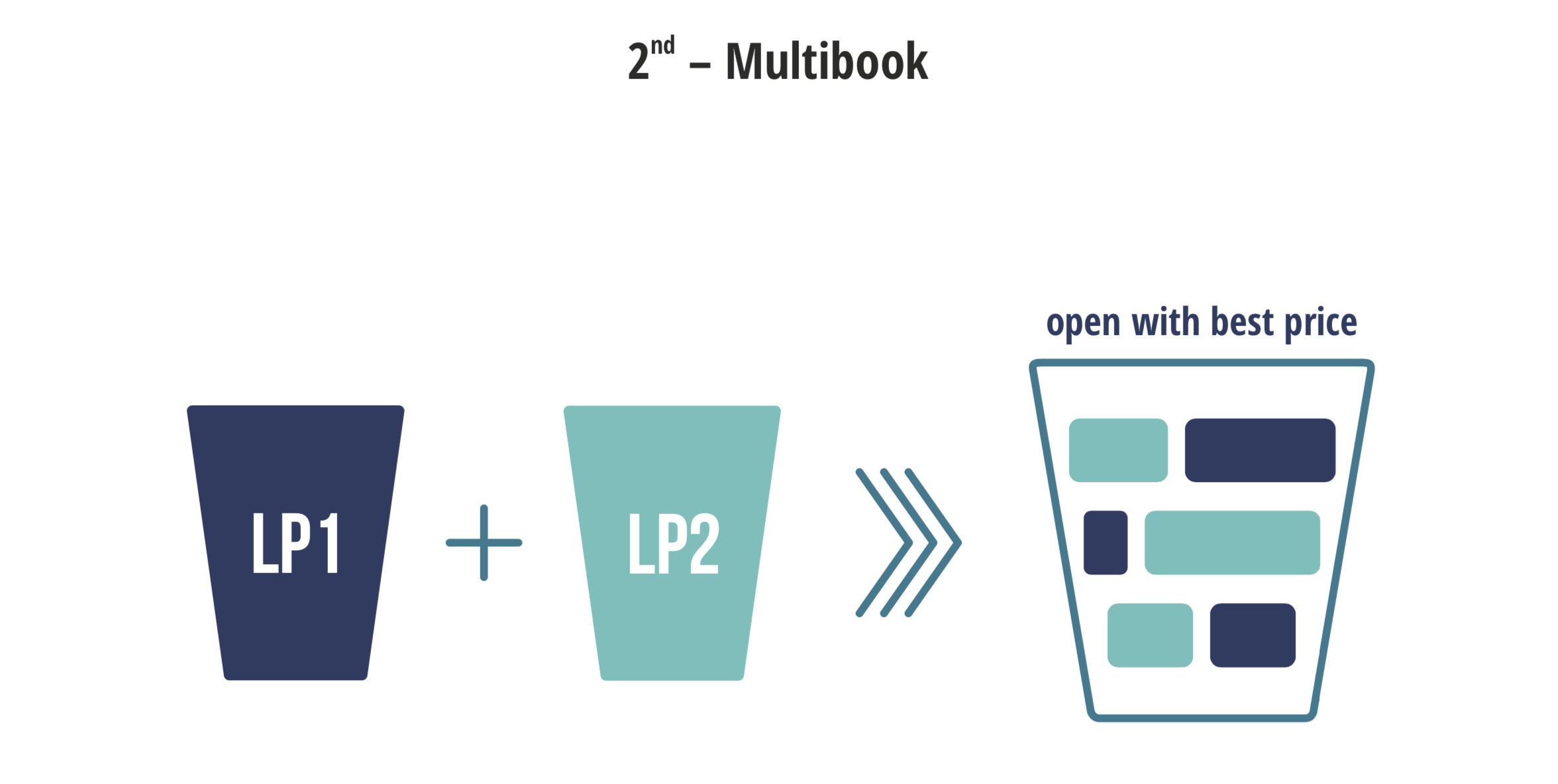
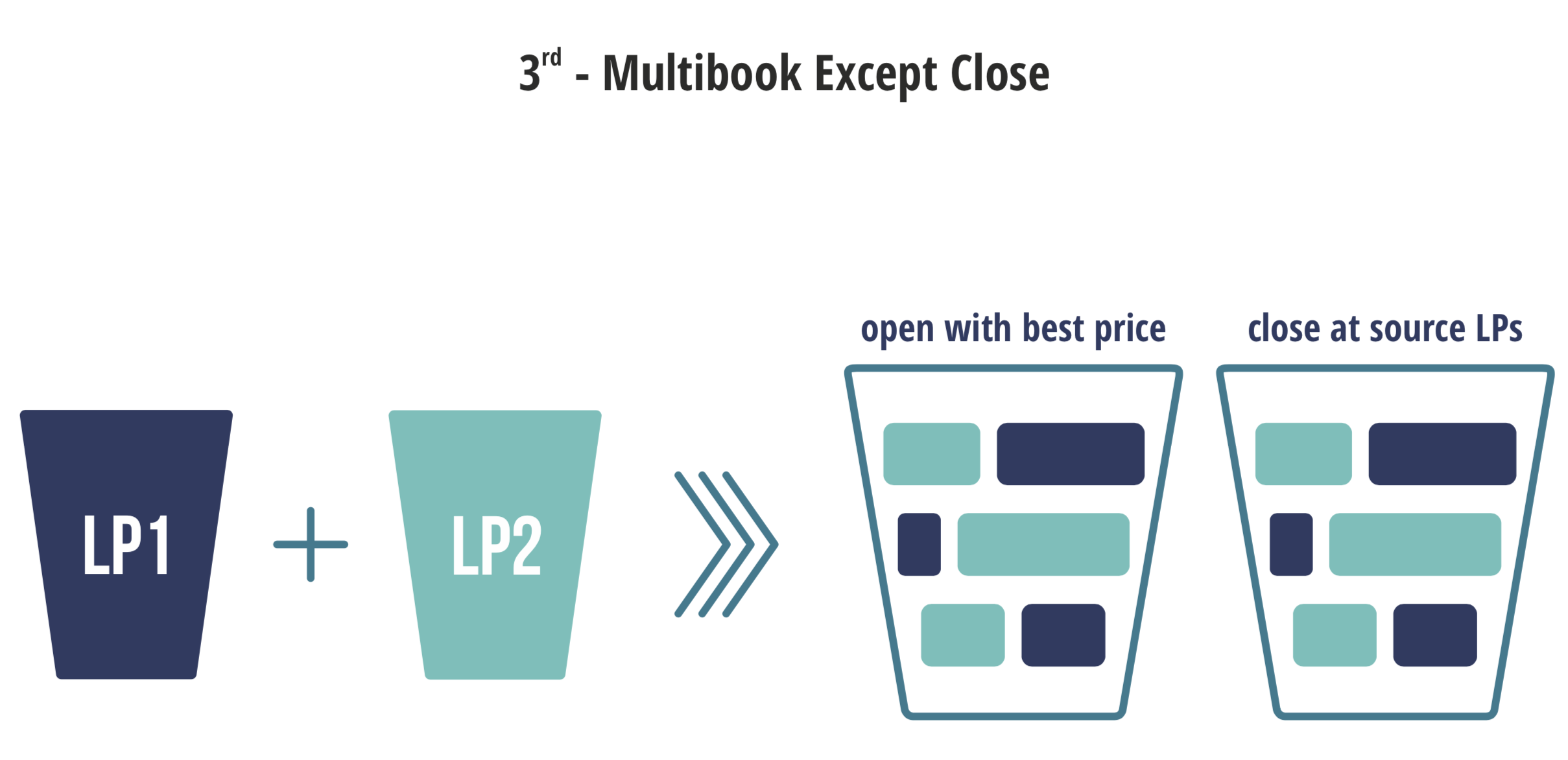
- Multibook except close – mode developed by TFB to solve one of the most persistent operational problems in multi-LP environments: the end-of-day consolidation problem.
When buy and sell orders spread across multiple liquidity providers, someone has to manually consolidate them at the end of each session. It is time-consuming and carries a high risk of human error. Multibook except close solves this by tracking detailed information about each order (who opened it and where) and closing it with the same LP where it was originally placed. The system handles the matching automatically.
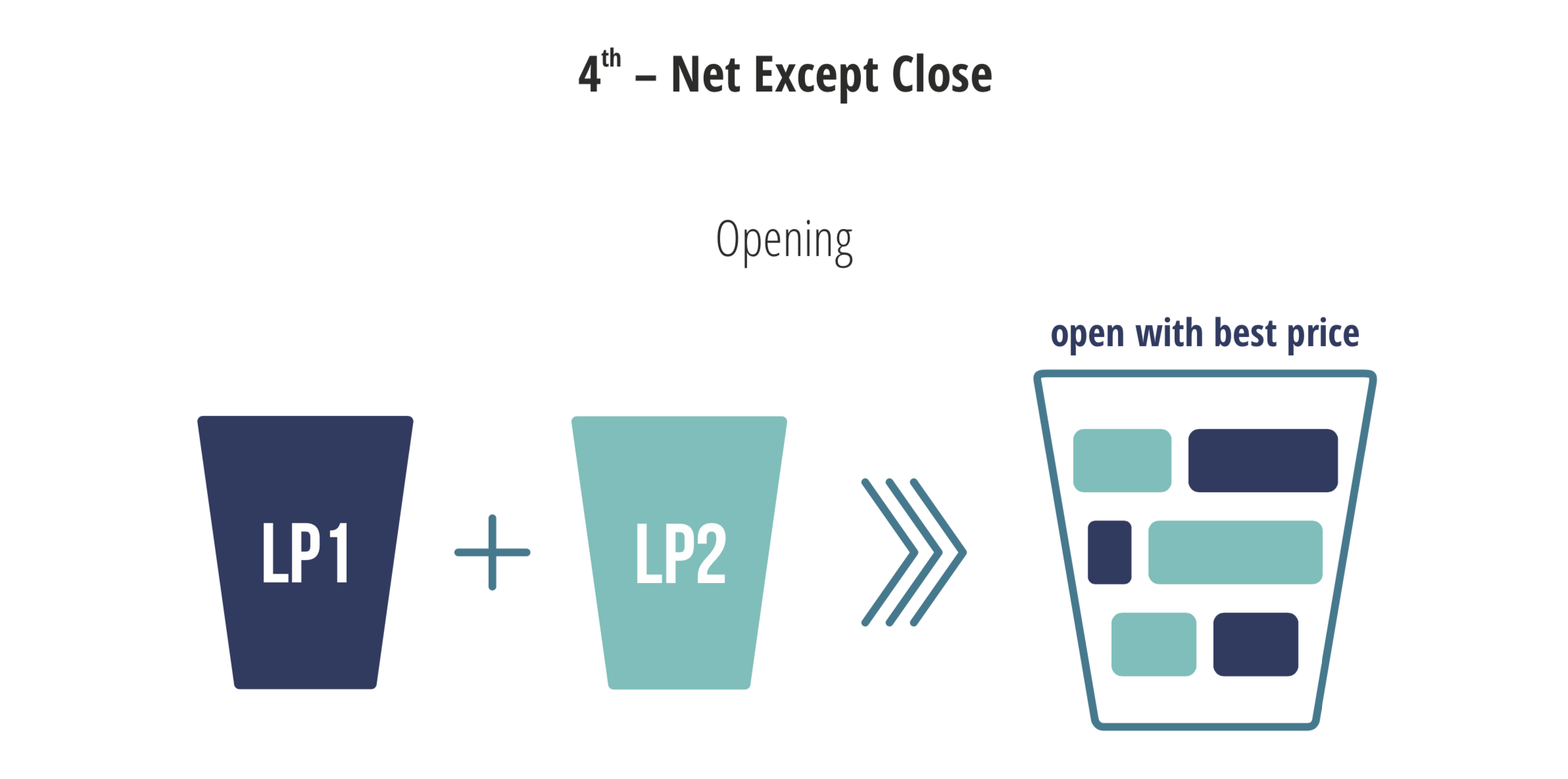
- Net except close. The system records all order actions, which orders were sent to which LPs, at what volume, and at what price. It then calculates the total net position across all LPs and identifies the most efficient way to close the order while simultaneously reducing net LP exposure.
If the quantity is evenly distributed across LPs, the order is split and executed proportionally. The result is a net position reduction that minimises residual exposure and avoids the spread and swap costs that accumulate when positions are left open longer than necessary.

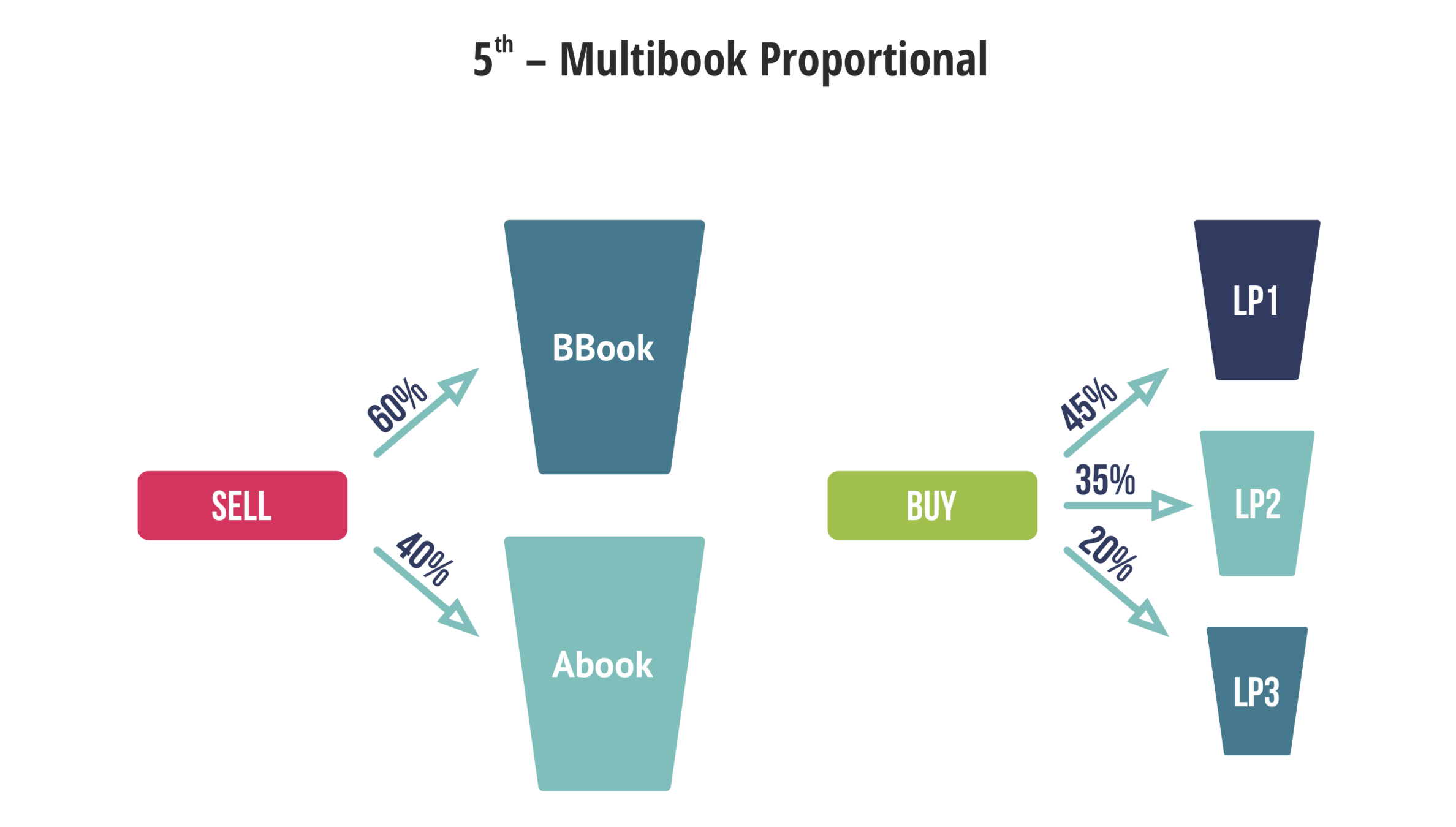
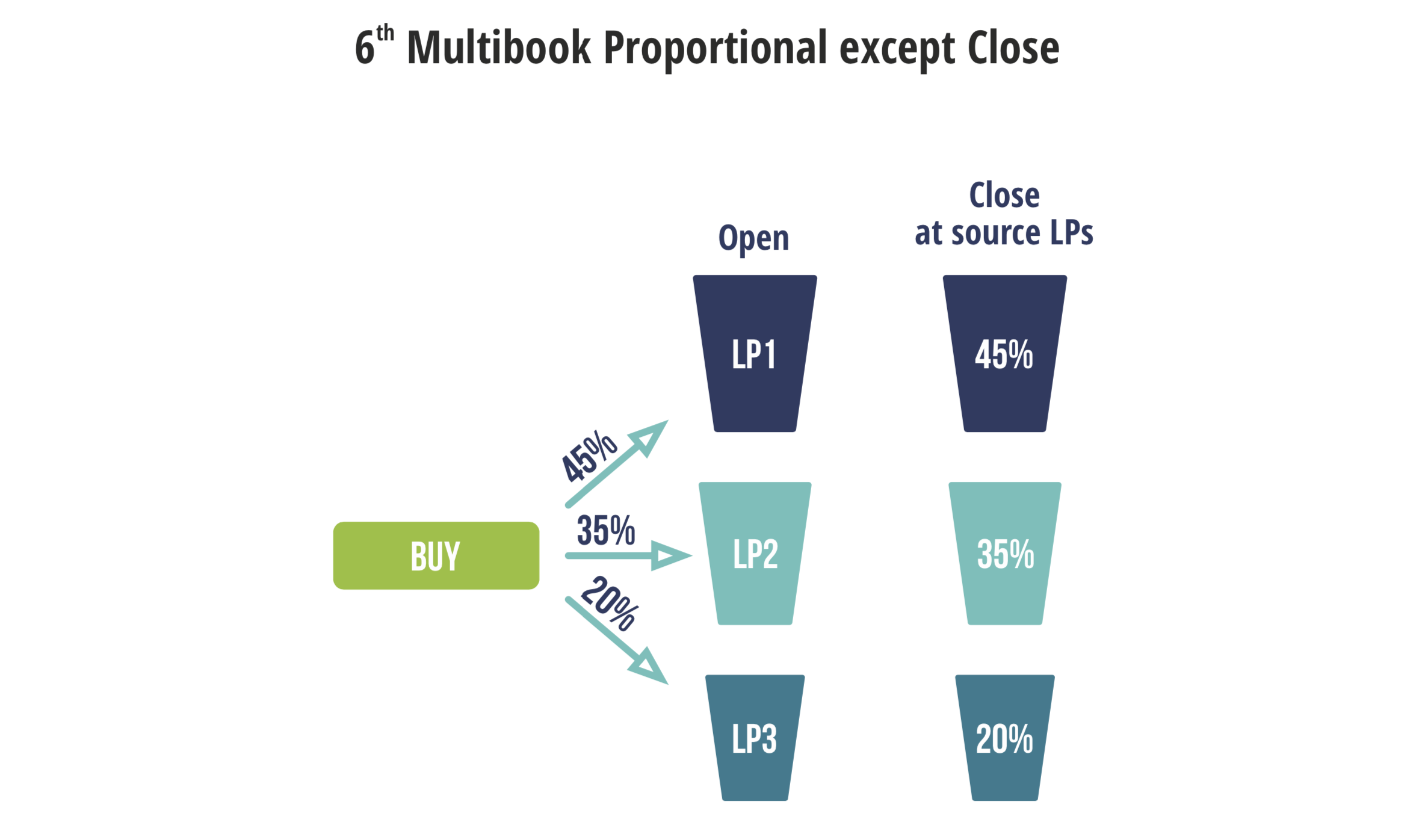
- Multibook proportional. The broker sets defined proportions for how order flow is distributed across the LP pool. Trade Processor executes according to those proportions on every order.
This is the primary mode for managing A/B book split ratios. Brokers can define exactly what percentage of flow goes to external liquidity versus the internal book, maintaining consistent risk parameters without manual intervention on each order.
- Multibook proportional except close. Combines the proportional routing logic of mode 5 with the close-tracking logic of mode 3. If the primary LP rejects the close request, the system automatically re-assigns execution to an alternative LP, retaining the full order history to ensure subsequent orders are routed correctly.
This mode provides the resilience that multibook proportional needs in real market conditions, where LP reject rates can spike during volatility and primary providers are not always available at the required volume.
Volume Consolidation
All six aggregation modes work in conjunction with Trade Processor’s Volume Consolidation feature. Volume Consolidation automatically nets and consolidates positions at a scheduled time (typically end of day) eliminating the manual process entirely.
For brokers still running end-of-day consolidation manually, this is one of the highest-value automation decisions available. The time recovered and the error risk removed are immediate and measurable.
Choosing the right aggregation mode
The right mode depends on the broker’s LP structure, client mix, and risk management approach. A broker running a pure A-book model with deep LP connectivity will prioritise different modes from one managing a hybrid book with strict exposure limits. Trade Processor’s aggregation settings are fully configurable by the broker – no vendor permission required to change a mode, adjust a proportion, or switch between profiles for different instruments or client groups.
For brokers evaluating which modes best fit their current setup, the TFB team is available to walk through the options in the context of a specific operation. Contact [email protected].

